The mid-17th to early 18th centuries brought about the birth of Classical Ballet. King Louis XIV of France brought ballet de cour(court ballet) to it’s most brilliant pinnacle. The Sun King – as he was dubbed after his most memorable dance performance as Apollo – was a talented and nimble dancer himself, and appeared in many court ballets over an eighteen year period.
In 1661, the year of Louis XIV’s ascension to absolute power, the King showed the world his dedication to the art of dance by establishing the world’s first ballet school, the Academie Royal de Danse, in a room at the Louvre. Thirteen of the most experienced Dance Masters were appointed to set standards for teaching and training the dancers for the court ballets.
Sunday, 11 December 2011

Giselle: A History
It was with Giselle, first performed in Paris in 1841, that Romantic dance-making reached its highest peak, thanks to the brilliant narrative devised by Théophile Gautier (1811-1872) and the music by Adolphe Adam (1803 -1856). Gautier was a well-known poet, novelist and, most importantly, dance critic. He was inspired to create Giselle after reading a work by German Romantic author Heinrich Heinebased upon an ancient legend about dancing female spirits. Adolphe Adam, the composer of Giselle, is now unjustly scorned by musicologists, yet he was one of the first to create a full-length ballet score – until then ballet music was a hotchpotch of citations from popular operas, concerts etc. For the first time in the history of ballet music, he also employed a number of leitmotifs, or main themes, in line with the precepts of early Romantic opera.
The great success of Giselle, alas, could not be repeated, and soon Romantic ballet was plagued by a sterile reiteration of trite formulae aimed exclusively at displaying the ballerina’s talents. A clear sign of the decadence of the genre was the Pas de Quatre, arguably the first plotless ballet, created as a purely technical showcase for four of the most famous female dancers of the time: Marie Taglioni, Carlotta Grisi,Fanny Cerrito (1817-1909) and Lucile Grahn (1819-1907). This bravura showcase was the brainchild of a clever English impresario, Benjamin Lumley and was first performed on 12 July 1845 at the Her Majesty’s Theatre in London. The British capital had responded particularly enthusiastically to appeal of the Parisian-born Romantic ballet.
The great success of Giselle, alas, could not be repeated, and soon Romantic ballet was plagued by a sterile reiteration of trite formulae aimed exclusively at displaying the ballerina’s talents. A clear sign of the decadence of the genre was the Pas de Quatre, arguably the first plotless ballet, created as a purely technical showcase for four of the most famous female dancers of the time: Marie Taglioni, Carlotta Grisi,Fanny Cerrito (1817-1909) and Lucile Grahn (1819-1907). This bravura showcase was the brainchild of a clever English impresario, Benjamin Lumley and was first performed on 12 July 1845 at the Her Majesty’s Theatre in London. The British capital had responded particularly enthusiastically to appeal of the Parisian-born Romantic ballet.
Information From:
http://www.roh.org.uk/discover/ballet/history/partthree.aspx
Royal Ballet: Giselle
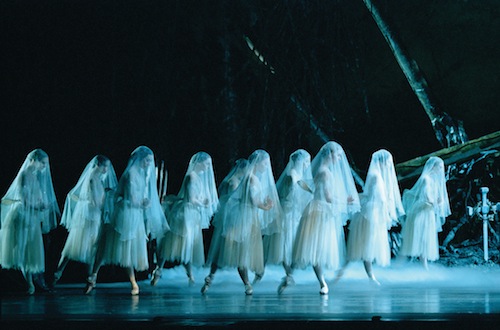
Giselle has a long pedigree on the ballet stage. It was first performed at the Paris Opéra in 1841, when its Rhineland village setting would have been exotically romantic to audiences. The second act takes place in the mysterious moonlit world of the Wilis. Here, the spectral forms of jilted brides who have committed suicide are compelled to haunt the men who deceived them, forcing them to dance themselves to death. Dressed in chaste white, the ensemble dances a hypnotic sequence of slow steps – a defining prototype of Romantic ballet.
The Royal Ballet’s current version uses choreography derived from the original 1841 version as preserved by the great choreographer Marius Petipa in his 1880s production for the Imperial Ballet in St Petersburg, and now restaged by Peter Wright.
Information From:
http://www.roh.org.uk/discover/ballet/giselle/index.aspx
The Royal Ballet’s current version uses choreography derived from the original 1841 version as preserved by the great choreographer Marius Petipa in his 1880s production for the Imperial Ballet in St Petersburg, and now restaged by Peter Wright.
Information From:
http://www.roh.org.uk/discover/ballet/giselle/index.aspx
Wednesday, 7 December 2011
Bell Tutu
The Romantic Tutu
The first tutu is credited as appearing in Paris in 1832 on Marie Taglioni in La Sylphide. Her skirt (see right) was cut above the ankle to show her famous legwork. This first tutu style was dubbed, "The Romantic Tutu”. This romantic style occurred during the “Romantic” period in ballet history.
Romantic Tutus are long, floating and ethereal. They are usually 3 – 5 layers of soft tulle.
Information from:
http://www.classacttutu.com/hints-history-of-tutus
The first tutu is credited as appearing in Paris in 1832 on Marie Taglioni in La Sylphide. Her skirt (see right) was cut above the ankle to show her famous legwork. This first tutu style was dubbed, "The Romantic Tutu”. This romantic style occurred during the “Romantic” period in ballet history.
Romantic Tutus are long, floating and ethereal. They are usually 3 – 5 layers of soft tulle.
Information from:
http://www.classacttutu.com/hints-history-of-tutus
Sunday, 4 December 2011
Culture in the 60's
Women had a much more relaxed view on sex, which is shown in Giselle through the story line as Giselle has two men that love her. Also the Wilis show feminism as they are fighting back against men.
Tuesday, 22 November 2011
Frederick Ashton
Sir Frederick Ashton was a commanding presence in the growth of The Royal Ballet from its humble origins in the 1930s, to his role as its director from 1963 to 1970 when it became one of the greatest companies in the world. A gifted dancer and choreographer of genius, he created more than 100 ballets over a 60-year career, including Cinderella, La Fille mal gardée and Sylvia.
His choreography is characterised by its synthesis of modern and classical form, and by its wit, lyricism and elegance. His ballets are at once extremely sophisticated and widely popular. He developed a personal style, which has become known as the ‘English style, characterised by its poise, purity of line and freshness, its use of the shoulders and torso, and for its fast, intricate footwork.
Ashton was always of his time but loved the idioms of the past: Cinderella pays homage to the great three-act classical ballets of Petipa, La Fille mal gardée recreates one of the most famous ballets of the 18th century.
Ashton combined the sophistication of such French and Russian models with an Englishman’s disregard for high aesthetics: the wonderfully eccentric chicken dance from La Fille mal gardée, for example. Above all, his ballets communicate a sense of carefree enjoyment and fun.
His choreography is characterised by its synthesis of modern and classical form, and by its wit, lyricism and elegance. His ballets are at once extremely sophisticated and widely popular. He developed a personal style, which has become known as the ‘English style, characterised by its poise, purity of line and freshness, its use of the shoulders and torso, and for its fast, intricate footwork.
Ashton was always of his time but loved the idioms of the past: Cinderella pays homage to the great three-act classical ballets of Petipa, La Fille mal gardée recreates one of the most famous ballets of the 18th century.
Ashton combined the sophistication of such French and Russian models with an Englishman’s disregard for high aesthetics: the wonderfully eccentric chicken dance from La Fille mal gardée, for example. Above all, his ballets communicate a sense of carefree enjoyment and fun.
Giselle Storyline
Act I
A pleasant valley in Germany
In Germany, it is a tradition to celebrate the vine harvest by drinking new wine at a different cottage in the village each day. The cottage selected was marked by a wreath with a wine jug in the centre hanging over the door. On this occasion the cottage where the peasant girl Giselle lives with her Mother, Berthe, is to be the scene of the celebration.
Giselle has fallen in love with Albrecht, Duke of Silesia, who, disguised as a peasant and using the hut opposite Giselle's cottage to hide his nobleman's dress, courts the unsuspecting girl. Hilarion, a gamekeeper who suspects the identity of his rival, is also in love with Giselle. The vintagers return with the last gathering of grapes and join Giselle and Albrecht in a dance but Giselle's mother is afraid that her passion for dancing will kill her delicate daughter who will then fall under the spell of the Wilis. The peasants are frightened by this but Giselle is amused at her mother's concern, and continues to celebrate the wine harvest and is crowned Queen of the Vine.
The Prince of Courland with his daughter, Bathilde, and hunting party stop at Giselle's cottage to taste the new wine. Giselle admires Bathilde and her clothes not knowing that she is engaged to Duke Albrecht. When Hilarion unmasks the true situation the shock is too great for Giselle who loses her reason and dies.
Act II
A forest clearing beside a pool at night
Beneath some tree stands a cross on which is carved the name, Giselle. Hilarion mourns Giselle at her tomb but an air of mystery pervades the forest and wilis, led by their queen, Myrtha, appear. The wilis are supernatural vampire-like spirits of betrothed girls who have been inordinately fond of dancing and died as the result of being jilted by faithless lovers.
Attired in their bridal dresses, they dance in the moonlight, determined to be revenged on all men. They lure any passers by to their part of the forestand force them to dance until they collapse from exhaution and die. Albrecht, too, visits Giselle's grave, repenting of the part he played in her death. Both Hilarion and Albrecht are trapped by the Wilis. For Hilarion there is no escape. Giselle's deep love for Albrecht saves him from the power of the relentless Queen and her attendant wilis. With the coming of dawn the wili's power is ended and they disappear leaving Albrecht to take a last farewell of Giselle.
A pleasant valley in Germany
In Germany, it is a tradition to celebrate the vine harvest by drinking new wine at a different cottage in the village each day. The cottage selected was marked by a wreath with a wine jug in the centre hanging over the door. On this occasion the cottage where the peasant girl Giselle lives with her Mother, Berthe, is to be the scene of the celebration.
Giselle has fallen in love with Albrecht, Duke of Silesia, who, disguised as a peasant and using the hut opposite Giselle's cottage to hide his nobleman's dress, courts the unsuspecting girl. Hilarion, a gamekeeper who suspects the identity of his rival, is also in love with Giselle. The vintagers return with the last gathering of grapes and join Giselle and Albrecht in a dance but Giselle's mother is afraid that her passion for dancing will kill her delicate daughter who will then fall under the spell of the Wilis. The peasants are frightened by this but Giselle is amused at her mother's concern, and continues to celebrate the wine harvest and is crowned Queen of the Vine.
The Prince of Courland with his daughter, Bathilde, and hunting party stop at Giselle's cottage to taste the new wine. Giselle admires Bathilde and her clothes not knowing that she is engaged to Duke Albrecht. When Hilarion unmasks the true situation the shock is too great for Giselle who loses her reason and dies.
Act II
A forest clearing beside a pool at night
Beneath some tree stands a cross on which is carved the name, Giselle. Hilarion mourns Giselle at her tomb but an air of mystery pervades the forest and wilis, led by their queen, Myrtha, appear. The wilis are supernatural vampire-like spirits of betrothed girls who have been inordinately fond of dancing and died as the result of being jilted by faithless lovers.
Attired in their bridal dresses, they dance in the moonlight, determined to be revenged on all men. They lure any passers by to their part of the forestand force them to dance until they collapse from exhaution and die. Albrecht, too, visits Giselle's grave, repenting of the part he played in her death. Both Hilarion and Albrecht are trapped by the Wilis. For Hilarion there is no escape. Giselle's deep love for Albrecht saves him from the power of the relentless Queen and her attendant wilis. With the coming of dawn the wili's power is ended and they disappear leaving Albrecht to take a last farewell of Giselle.
Wednesday, 2 November 2011
Tuesday, 1 November 2011
Giselle
Giselle is one of the most important and popular ballets in history. It appeared when French ballet had just undergone a revolution with Marie Taglioni‘s appearance as a ghostly Mother Superior in the “Ballet of the Nuns” (from Act III of Meyerbeer’s 1831 opera Robert le Diable) where nuns in white tutus came to life in a 16th century moonlit cloister. Taglioni’s fluid and effortless dancing gave the illusion of weightlessness and caused a great sensation, paving the ground for the great “white ballets” from classical dance’s Romantic period. Giselle and La Sylphide (also led by Marie Taglioni) inspired ballets like La Fille du Danube, L’Ombre, La Gitana and La Péri, stories that depicted the impossible love between mortals and elusive fantastic creatures set in earthly backdrops of alpine villages, Scottish highlands and Spanish riverbanks and that borrowed heavily from Romantic poetry and painting.

http://www.theballetbag.com/wp-content/uploads/2011/01/BC-Gis.jpg
Giselle ou Les Wilis premiered at the Paris Opera on 28 June, 1841 with Carlotta Grisi as Giselle, Lucien Petipa (brother of Marius) as Albrecht and Adèle Dumilâtre as Myrtha. The ballet was immediately declared not only a worthy successor to La Sylphide but also “the greatest ballet of its time”, a triumphant reception. Giselle remained in the Paris Opera repertoire until 1849. When it became outmoded the ballet was completely dropped (after 1868); it would only be seen again in Paris decades later as part of the Ballets Russes’ second Paris season, with Karsavina and Nijinsky in the lead roles.
Following its success in Paris Giselle toured around Europe, traveling as far as the Imperial Theatre in St. Petersburg. This particular 1842 production was staged by Titus, a ballet master who recreated the ballet from memory. But in 1848, with Jules Perrot coming into the Imperial Theatres as ballet master, a new Russian version of Giselle was staged with Marius Petipa as Albrecht. This Giselle stayed in repertory until 1859 when Perrot returned to Paris. Next came Marius Petipa’s 1862 version, with several alterations to cater for the Italian virtuoso ballerinas of the time, most notably, the insertion of the Act I Giselle variation as we know it.
Information from:
http://www.theballetbag.com/2011/01/11/giselle/
http://www.theballetbag.com/wp-content/uploads/2011/01/BC-Gis.jpg
http://www.theballetbag.com/wp-content/uploads/2011/01/BC-Gis.jpg
Giselle ou Les Wilis premiered at the Paris Opera on 28 June, 1841 with Carlotta Grisi as Giselle, Lucien Petipa (brother of Marius) as Albrecht and Adèle Dumilâtre as Myrtha. The ballet was immediately declared not only a worthy successor to La Sylphide but also “the greatest ballet of its time”, a triumphant reception. Giselle remained in the Paris Opera repertoire until 1849. When it became outmoded the ballet was completely dropped (after 1868); it would only be seen again in Paris decades later as part of the Ballets Russes’ second Paris season, with Karsavina and Nijinsky in the lead roles.
Following its success in Paris Giselle toured around Europe, traveling as far as the Imperial Theatre in St. Petersburg. This particular 1842 production was staged by Titus, a ballet master who recreated the ballet from memory. But in 1848, with Jules Perrot coming into the Imperial Theatres as ballet master, a new Russian version of Giselle was staged with Marius Petipa as Albrecht. This Giselle stayed in repertory until 1859 when Perrot returned to Paris. Next came Marius Petipa’s 1862 version, with several alterations to cater for the Italian virtuoso ballerinas of the time, most notably, the insertion of the Act I Giselle variation as we know it.
Information from:
http://www.theballetbag.com/2011/01/11/giselle/
http://www.theballetbag.com/wp-content/uploads/2011/01/BC-Gis.jpg
Thursday, 27 October 2011
Romantic Ballet
When we think of ballet dancing in the 19th century we think of romanticism. It was just after the French Revolution and the middle class was gaining power. This new middle class wanted to experience all the art world had to offer. They also wanted to escape. The themes of the ballets were often about man versus nature, the supernatural and exotic lands. This was because of the time, life was very down and industrialisation was taking place, so ballets were made using these themes to allow the audience to feel they can escape the real world.
Marie Taglioni was the first ballerina that made the public take notice to dancing on pointe. Dancing on pointe then became the norm for ballerinas. At this time as well ballerinas were taking over in the ballets. No longer were the men the stars. The public wanted to see the females float on air. The Austrian ballerina Fanny Elssler was one of Taglioni's rivals. She became well known for her role in Le Diable Boiteux in 1836. The epitome of the Romantic ballets is Giselle. It is about an aristocrat who is haunted by spirits. This gave another ballerina fame named Carlotta Grisi.
Marie Taglioni was the first ballerina that made the public take notice to dancing on pointe. Dancing on pointe then became the norm for ballerinas. At this time as well ballerinas were taking over in the ballets. No longer were the men the stars. The public wanted to see the females float on air. The Austrian ballerina Fanny Elssler was one of Taglioni's rivals. She became well known for her role in Le Diable Boiteux in 1836. The epitome of the Romantic ballets is Giselle. It is about an aristocrat who is haunted by spirits. This gave another ballerina fame named Carlotta Grisi.
The scenery of the ballets at the time also helped to create the supernatural stories. Along with pointe work, wires were used to help suspend dancers for short periods. Other equipment that was used were trap doors, sliding painted flats and backdrops, and gas lighting. Music was used even more to evoke the atmosphere of each scene.
Costumes were still evolving and the Romantic tutu was now in vogue. Although the term tutu was not used until 50 years later. This was the skirt that Marie Taglioni made popular when she danced in La Sylphide. It was a white bell-shaped skirt that fell from her bodice. The skirt helped to create her spirit like character.
The romantic era of ballet has no specific end however the last romantic ballet is considered to be Arthur Saint-Léon's 1870 ballet Coppélia.
Information from:
http://www.wish-upon-a-ballet.com/the-1800s-and-the-romantic-ballet.html
Historical Context Lessons
Costumes were still evolving and the Romantic tutu was now in vogue. Although the term tutu was not used until 50 years later. This was the skirt that Marie Taglioni made popular when she danced in La Sylphide. It was a white bell-shaped skirt that fell from her bodice. The skirt helped to create her spirit like character.
The romantic era of ballet has no specific end however the last romantic ballet is considered to be Arthur Saint-Léon's 1870 ballet Coppélia.
Information from:
http://www.wish-upon-a-ballet.com/the-1800s-and-the-romantic-ballet.html
Historical Context Lessons
Marius Petipa
Born: 1818
Died: 1910
Marius Petipa was born in 1818 in Belgium.
The family moved to Brussels where Petipa attended the Grand College and also studied music at the conservatoire. He disliked dancing as a youngster but made such progress that he appeared in his father's La Dansomanie n 1831. In 1838 Petipa became a principal dancer at the theatre in Nantes, France where he also staged opera dances for the theatre.
He had a great flair for staging, for writing imaginative scenarios and for developing the full-length ballet into a grand spectacle with a structured form: a set sequence of pas d’actions, divertissements, ensembles and pas de deux.
Under Petipa’s reign, dancers were encouraged to sustain longer balances, higher jumps and stronger pointe work. Yet, he was also the custodian of high academic standards and never sacrificed the essentials of elegance and grace for athletic virtuosity. His Imperial Russian court audiences demanded formality and elegance of classicism.
Inevitably the transmission from dancer to dancer over a century and a half has altered the fine details of Petipa's original steps, but the living tradition of ballet everywhere still bears Petipa's stamp and his authority.
Information from:
Died: 1910
Marius Petipa was born in 1818 in Belgium.
The family moved to Brussels where Petipa attended the Grand College and also studied music at the conservatoire. He disliked dancing as a youngster but made such progress that he appeared in his father's La Dansomanie n 1831. In 1838 Petipa became a principal dancer at the theatre in Nantes, France where he also staged opera dances for the theatre.
He had a great flair for staging, for writing imaginative scenarios and for developing the full-length ballet into a grand spectacle with a structured form: a set sequence of pas d’actions, divertissements, ensembles and pas de deux.
Under Petipa’s reign, dancers were encouraged to sustain longer balances, higher jumps and stronger pointe work. Yet, he was also the custodian of high academic standards and never sacrificed the essentials of elegance and grace for athletic virtuosity. His Imperial Russian court audiences demanded formality and elegance of classicism.
Inevitably the transmission from dancer to dancer over a century and a half has altered the fine details of Petipa's original steps, but the living tradition of ballet everywhere still bears Petipa's stamp and his authority.
Information from:
Subscribe to:
Comments (Atom)