http://www.theballetbag.com/wp-content/uploads/2011/01/BC-Gis.jpg
Giselle ou Les Wilis premiered at the Paris Opera on 28 June, 1841 with Carlotta Grisi as Giselle, Lucien Petipa (brother of Marius) as Albrecht and Adèle Dumilâtre as Myrtha. The ballet was immediately declared not only a worthy successor to La Sylphide but also “the greatest ballet of its time”, a triumphant reception. Giselle remained in the Paris Opera repertoire until 1849. When it became outmoded the ballet was completely dropped (after 1868); it would only be seen again in Paris decades later as part of the Ballets Russes’ second Paris season, with Karsavina and Nijinsky in the lead roles.
Following its success in Paris Giselle toured around Europe, traveling as far as the Imperial Theatre in St. Petersburg. This particular 1842 production was staged by Titus, a ballet master who recreated the ballet from memory. But in 1848, with Jules Perrot coming into the Imperial Theatres as ballet master, a new Russian version of Giselle was staged with Marius Petipa as Albrecht. This Giselle stayed in repertory until 1859 when Perrot returned to Paris. Next came Marius Petipa’s 1862 version, with several alterations to cater for the Italian virtuoso ballerinas of the time, most notably, the insertion of the Act I Giselle variation as we know it.
Information from:
http://www.theballetbag.com/2011/01/11/giselle/
http://www.theballetbag.com/wp-content/uploads/2011/01/BC-Gis.jpg

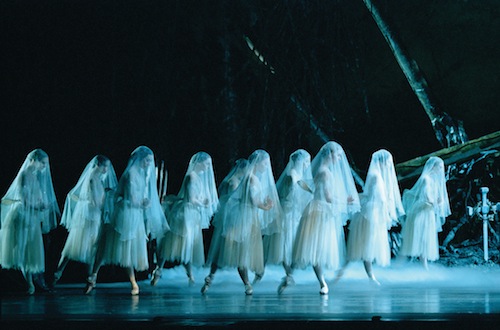
The image shows the Corps de Ballet performing as the Wilis, the dead unmarried women.
ReplyDelete